



A tip for little readers who always want more!
22 May, 2019
Have I ever told you that my husband teaches literature at the college level (CEGEP)? So you'll understand that our house is lined with books! We own six well-stocked bookcases that we empty and refill over time. During one of our recent long conversations where we set the world to rights, he confided that, over his 12 years of experience, he has noticed a decline in his students. Clearly, his CEGEP students are having more and more trouble concentrating and reading texts longer than two pages. According to him, the overstimulation linked to screen use is largely responsible for this phenomenon.
That conversation got the little hamster in my head going (it must be so tired of running!), and a few days later I came up with a new idea for my reader-kids-and-future-CEGEP-students. Remember required reading at CEGEP? Some of it was a wonderful discovery, some of it pure torture. Still, you had to make the effort to read what was assigned, since it was a mandatory test. That's how I got through some books that seemed boring at first, where the plot took a while to get going, but that became extremely interesting once you got past the first 100 pages. If they hadn't been forced on me, I would have missed out on several fascinating works that shaped my experience as a reader and helped me grow intellectually.
My kids are already very good readers. Since they were tiny, I've been giving them reading tokens. Every evening, we have a 20-minute period where everyone reads whatever they like, or quietly flips through the pages of a book. Each calm, focused reading period earns them a token from the General Store. My oldest likes to read comics and short novels. His little brother swears by nonfiction books and informational magazines. For them, these are comfortable reads that match what they feel like at the moment. However, I wanted to nudge them out of their comfort zone and get them to read books that go beyond their usual interests. If your kids have reached a fairly high reading level, you're going to love what follows!
So we set up a required reading list of two or three books a year, just enough to push them out of their comfort zone, but not so many that they get discouraged. I really like new children's literature, but it was important to me that my kids know the great literary classics, the ones that have stood the test of time, the ones everyone read as a child… or should have read! So I bought about twenty books that they'll have to read between the ages of seven and thirteen. In each book, we glued a library card where every family member has to write their name once they've read the book, along with a rating out of ten. Of course, we parents have to read each of these novels too and fill out the card, to set an example, but also so we can discuss them with the kids!
So here's my list of great classics, which is sure to inspire you:
Age 7:
- The Wonderful Wizard of Oz – L. Frank Baum
- Charlie and the Chocolate Factory – Roald Dahl
Age 8:
- The Little Prince – Antoine de Saint-Exupéry
- Black Beauty – Anna Sewell
- For English-speaking families, try Ramona the Pest by Beverly Cleary, which also follows a spirited little girl's mishaps (the French classic “Les malheurs de Sophie” by the Countess of Ségur is out of print in English)
Age 9:
- Around the World in Eighty Days – Jules Verne
- Peter Pan – J.M. Barrie
- Alice's Adventures in Wonderland – Lewis Carroll
Age 10:
- The Adventures of Pinocchio – Carlo Collodi
- White Fang – Jack London
- The Wonderful Adventures of Nils – Selma Lagerlöf
Age 11:
- The Adventures of Tom Sawyer – Mark Twain
- Harry Potter – J.K. Rowling
- Little House on the Prairie – Laura Ingalls Wilder
Age 12:
- Robinson Crusoe – Daniel Defoe
- Oliver Twist – Charles Dickens
- Frankenstein – Mary Shelley
Age 13:
- Arsène Lupin, Gentleman-Thief – Maurice Leblanc
- The Strange Case of Dr. Jekyll and Mr. Hyde – Robert Louis Stevenson
- The Hobbit – J.R.R. Tolkien
Not always easy to motivate kids to dive into a new book that doesn't interest them at first, is it? Very often, I read the first few pages with them to help them get into the story and get to know the characters. I leave them to it once the plot is well underway and their curiosity is piqued. These shared reading moments spark their interest and make them want to dive into the book on their own, without my help. As Philippe Meirieu so aptly puts it in his French-language book “Comment aider nos enfants à réussir”: “parents have a role to play, easing worry, calming the fear of the unknown, walking a little way with the child... then tiptoeing away to leave them to their joy of discovering the new pleasures of understanding.” For English-speaking families, a good read on a similar theme is How Children Succeed by Paul Tough.
Finally, to give them a little extra push, I award 20 General Store tokens for each book finished (with or without my help!). It's up to you to adapt this idea to your child's reading abilities. One book a year may be enough at the very beginning; what matters is that it's just hard enough to let them experience success without getting discouraged!
For more reading suggestions, I invite you to check out this article from La Presse (in French) or to get the book 1001 Children's Books You Must Read Before You Grow Up. Also check out our printable that lets your kids keep track of their favorite books!
Would you like first access to all the content published in the Magazine each month, plus our Toolbox, which includes, among other things, free downloads that are as practical as they are fun? Subscribe to Belles Combines Magazine today!
Put these tips into practice
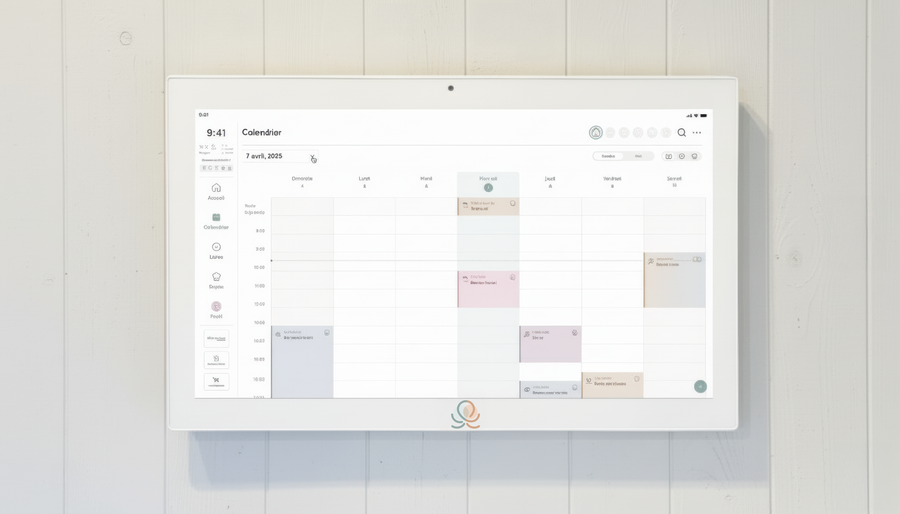
Get the whole family organized with Octave
Meals, chores, the calendar and routines for the whole family in one place: on everyone's phone and on the Station on your wall.
The app is free on iOS and Android.