


Mom, can you be clearer? Tips for giving instructions kids really understand
05 February, 2020
- Be good.
- Listen to the instructions.
- Be nice to your brother.
- Can you sit properly?
- Be good.
But what does “being good” actually mean to a little 4-year-old? Not much, and yet it can mean so many things at once! It's vague, and it depends on how the child has been raised at home. So from one family to the next, being good can look like pretty much anything! The same goes for the other instructions above. They vary from family to family, and sometimes from one parent to the other. In this article, I'll show you how to make your instructions clearer by focusing on observable behaviors. That way, we stay within a positive parenting approach, and we can help our child improve and become more independent.
One small step at a time
First of all, you can't work on everything at once! Start with a single goal. Focus on it and make it the priority. It can be something you want to get your child to do (e.g. sharing, helping out, doing a chore) or a problem behavior you'd like to see disappear (e.g. bedtime meltdowns, refusing to cooperate at toothbrushing time). If your child is old enough, you can ask them to think about what they'd like to improve. The behavior also has to be observable. For example, mornings at our house used to be really hard. My oldest would dawdle at the breakfast table and take forever to get dressed. I'd repeat the instructions over and over. I'd end up losing my temper or helping him because we were going to be late. To fix the situation, we put a few little tricks in place.
Tip #1: Use visual tools
- We went with the Morning Routine Bracelet. It's simple and effective! He knows what he has to do and can check it on his own. (Your child would rather not wear a bracelet? Try our Petites Séquences stickers instead!)
- The instruction: “After breakfast, get dressed on your own, and quickly.”
- The observable behavior: he gets dressed without help, and quickly.
Things were going well: he was now getting dressed on his own by following the morning routine, but he still wasn't quite fast enough.
Tip #2: Besides being observable, a behavior can be given a time frame
- We set a timer for him.
- The instruction: “After breakfast, get dressed on your own before the timer goes off. You have 5 minutes.”
It made a huge difference. He does what's asked quickly, and he enjoys doing it. It's like a game or a mission.
Pick your battles
When my kids were younger, one of our instructions was also “Be nice”: another gem that isn't exactly crystal clear! Instead of asking my kids to be nice, I now ask them:
- to share with others;
- to lend a hand without my having to ask;
- to tidy up and do a chore on their own.
I didn't ask for all of it at once! One small request at a time!
Reward rather than reprimand
Instead of endlessly repeating yourself and correcting your child when they don't do what they're supposed to, try going the positive route! Reward your child every time they show the expected behavior, until it becomes automatic. With the General Store, it practically runs itself, and it's easy to manage. Every time my son helps his brother – a token! Every time he does his homework without grumbling – a token! Every time he lends a toy or lets his brother play with him – a token! Every time my little one heads off to daycare smoothly (no meltdown) – a token! Every time he puts on his pajamas and goes to bed without whining – a token! It may sound like a lot of rewards, but with this kind of conditioning, kids get motivated to adopt the behavior on their own, without us having to remind them. Once the expected behavior comes more naturally, you can reward less often and switch to verbal reinforcement instead. Congratulate them, thank them. At dinnertime, you can also point out the good deed to the rest of the family:
- Honey, guess what? This morning I noticed our oldest helped his brother with his breakfast. That was really sweet of him!
In the end, social reinforcement carries far more weight than a reward. The token is just a way to encourage the behavior until it becomes second nature. Also, at our house, we like to focus on experiences rather than gifts or surprises. That's why our General Store comes with privilege coupons (which are included in the store, by the way!). I pick a few and put them in whichever section I think fits. To give you a few examples, here's what my kids can get:
For 10 tokens
- A coupon for a 2nd bedtime story;
- A coupon to choose the menu for the next dinner.
- A coupon for a picnic in the living room;
- A coupon to stay up 20 minutes past bedtime.
I rotate the privilege coupons depending on my preferences and what's doable at the time. If we have a very busy weekend, I won't include the option of inviting a friend over or eating out! We keep the rewards realistic! But it's a nice alternative for weeks when our General Store is a little bare, or when you want to cut back on buying surprises.
I hope these few little ideas inspire you to focus more on observable behaviors, so your child clearly understands what you expect and your days can feel a little gentler…
Pssst! Check out our other blog posts for more reward and privilege ideas, plus other tips for using positive reinforcement at home!
Would you like first access to all the content published in the Magazine each month, plus our Toolbox, which includes, among other things, free downloads that are as practical as they are fun? Subscribe to Belles Combines Magazine today!
Put these tips into practice
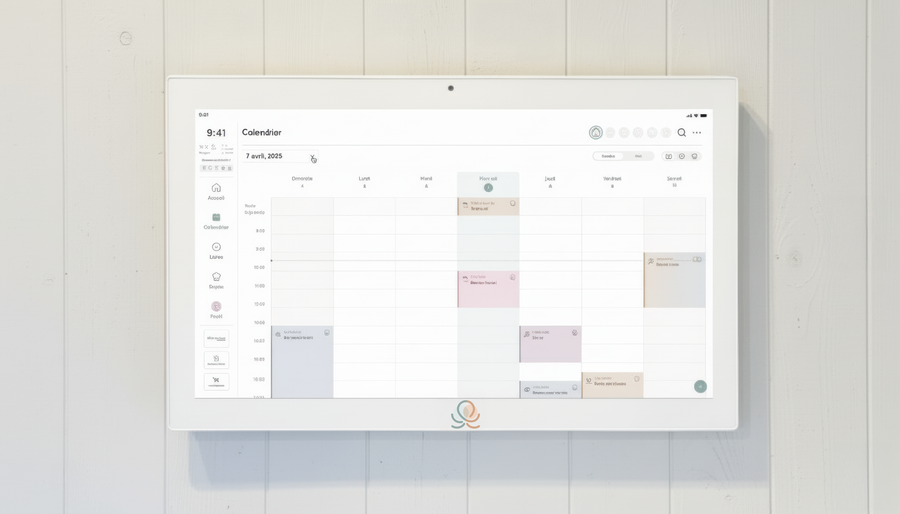
Get the whole family organized with Octave
Meals, chores, the calendar and routines for the whole family in one place: on everyone's phone and on the Station on your wall.
The app is free on iOS and Android.
1 comment
Très intéressant ! Bien hâte d’essayer le magasin général!