

Preventing difficult behaviors: the five Cs to remember

10 January, 2020

As parents, we often feel like we're in a constant, never-ending process of managing our children's behavior! I have good news for you: that's normal! Our little ones are in the process of shaping themselves as individuals, and it's us, the parents, with our guidance and our discipline, who help them grow. Discipline is a big concept that has evolved a lot over the past few decades. When I look at the disciplinary model my parents used compared to our model at home, some things come back and there are some things I'd rather not repeat. Mindsets have changed and so have ways of doing things. And that's perfectly fine! In this article, I'll try to help you understand the different spheres of discipline and suggest ways to handle more difficult behaviors.
C is the letter to remember!
There are different theoretical models, but to explain discipline quickly, I've picked ideas here and there that spoke to me the most. It's easy to remember: all the keywords start with the letter C. For each keyword, I give you a short explanation, but also an example.
  1. Consistency: maintaining your expectations over time
If I don't want my son bringing toys in the car on the way to daycare, I stick to my rule. After a restless night with several wake-ups, I might be tired. I might also want to buy some peace and let him bring his toy in the car. And that's how we set a precedent; my son will remember it the next day and try to bring his toy in the car. And he'd be right! If I'm not consistent, I should expect my child not to really know what I expect of him. That's when the meltdowns (the famous tantrums!) happen. At our house, it's toys in the car; in other families, it's candy at the grocery store, a cookie before bed, and so on. It's also important for consistency to be present between both parents. If Mom says no and Dad says yes, we're at an impasse! We're a team, we stand together!
  1. Coherence: being an example
If I want my child to put their shoes away in the closet, it's important that I do it with mine. Children learn by imitation, so we have to be a role model. Otherwise, they'll quickly realize that what we say and what we do don't match. In discipline, “do as I say, not as I do” is a parent's enemy!
  1. Clear, short instructions: being concise
I've repeated the same instruction to my son four times and he still isn't following it? After making sure I have his attention and that he's looking at me, I can start questioning my instruction… Is my instruction clear? Could I shorten it? Cut out the superfluous, useless words that get in the way of my child's understanding? We need to give the essentials and that's all. Even though, as parents, we feel like explaining and adding more, it only gets in the way of our intervention. One instruction = a few words. The child doesn't need more to know what's expected of him.
  1. Consequences: staying logical
When my son doesn't follow an instruction, I have to give him a consequence connected to it. In the mornings, my oldest was very slow getting ready. He was a real “slowpoke”! When it came to dawdling, he was a champion! We often lost patience with him because he refused to get dressed, eat breakfast, brush his teeth… Every step was long and painful. When we explained that he wouldn't have any playtime until he was ready to leave, he understood what he'd lose if he didn't hurry up. The link was direct, the consequence was logical.
  1. Concrete: focusing on the positive
I'll always remember my father when we went on vacation. When we were playing around the pool, he spent his time telling us: “don't run, don't run, don't run.” You know what? We ran anyway! When I give an instruction in the negative form, I always have that little thought in my head. With a child, it's more effective to say the behavior you expect than the one you don't want. So instead of telling my kids “don't run, don't run, don't run,” I tell them to walk. Generally, it works well!
A few rapid-fire ways to step in with children
  • Positive reinforcement
By praising, thanking and pointing out good behavior, we make the child want to repeat it. We focus on the good things, on the effort.
  • Modeling
Be a role model. I love the quote “Be the change you wish to see in the world.” I apply it every day with my kids. What kind of adult do I hope to see them become? How can I show them, teach them? What do I expect of them?
  • Humor
I use a lot of humor with my kids to play down or defuse a situation. It changes the tone and kids often get on board quickly.
Rapid-fire tips for prevention
  • Choices
If I sense my son is fragile and about to fall apart, I often offer him two choices. It gives him a sense of control and, since I offer two choices that both work for me, we both come out winners.
  • Organizing the space
In our daily life, there are several set-ups made for the children. For example, games with pieces that are too small, which I prefer to manage myself, are stored in places the children can't reach. That way, the kids don't come to me with that very game that I then have to take away from them... with the meltdown that follows! Prevention is better than cure! On the other hand, everything they can handle and play with is placed at their level so that they're independent and don't always have to ask me for it.
  • The family meeting
Sometimes a behavior bothers some family members. We can set up a family meeting that lets those members put the problem into words, lets the family think about the issue and find solutions together to resolve it.
Discipline is long-term work and ours is still far from perfect! Every child is different, so the parent is in a constant state of learning! I hope my little explanations and tips have helped you better understand your children's difficult behaviors and have equipped you for your own family discipline. Keep in mind that positive discipline isn't always easy, but it pays off in the end!
Want to be the first to see everything published in the Magazine each month, and get access to our Toolbox, which includes, among other things, free downloads that are as practical as they are fun? Subscribe to Belles Combines Magazine today!
Put these tips into practice

Get the whole family organized with Octave

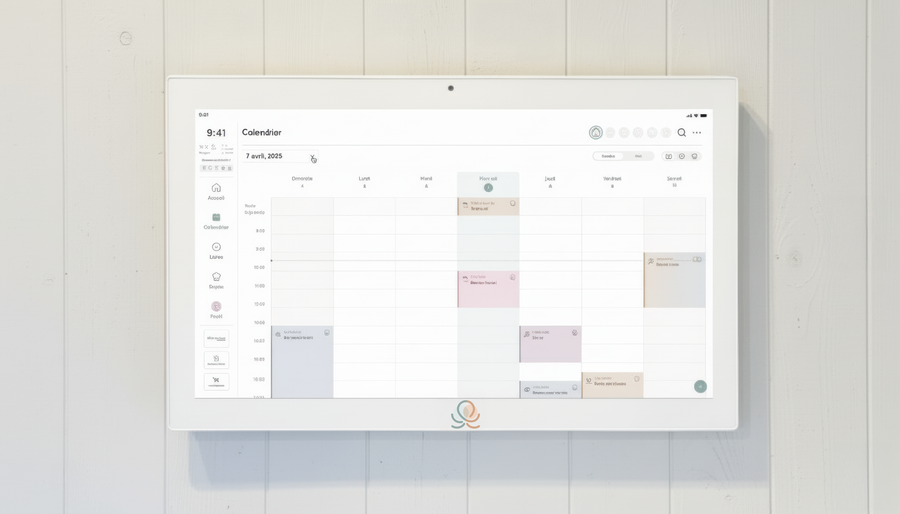
Meals, chores, the calendar and routines for the whole family in one place: on everyone's phone and on the Station on your wall.

Discover the Octave app See the Octave Station →

The app is free on iOS and Android.

1 comment

Julie Fortier

Je viens de découvrir votre site, une petite merveille! Merci beaucoup, très bien verbalisé!

Leave a comment

Please note, comments need to be approved before they are published.

This site is protected by hCaptcha and the hCaptcha Privacy Policy and Terms of Service apply.