



Tips and advice for learning a new task
01 August, 2022 • Par Laurence Morency-Guay
School brings with it a number of tasks: packing lunches, the morning routine (breakfast, getting dressed, hygiene, etc.), filling the school bag and doing homework. Many parents wonder how to best support their children as they learn these tasks and help them become independent in doing them. Here are a few ideas to support children in getting involved in daily tasks.
Social learning
One of the pillars of learning behaviors in children is imitating role models. Children learn a lot by watching the adults around them. By adopting yourself the behaviors you'd like your children to adopt in turn, you give them an example to follow and make learning easier when the time comes.
For example, if you have a well-defined morning routine yourself and your children watch you eat, then get dressed and brush your teeth every day, they'll be able to naturally hop on board with these tasks in turn when the time comes. If they watch you go through the steps of packing lunches, it will also be easier for them to take those steps on when they get involved in that task.
Scaffolding
As Vygotsky presents in his learning theory, a child develops within different zones of proximal development, meaning there are periods when they're more inclined to make certain kinds of progress, and it's up to the parent to seize those opportunities to help them build their skills. Early childhood is a zone of proximal development for many skills related to routines and daily tasks, which is why it can be best to start encouraging your child to do certain things even before they start school. With scaffolding, a parent can let the child do some things on their own, then help just at the limit of what they can no longer do themselves. Concretely, let's take getting dressed. At 4, a child may be able to put on all their clothes themselves but not be able to zip up their sweater on their own. By letting them put on their clothes and stepping in only to help with the zipper, you make sure you're supporting the child in what they can do on their own without discouraging them by insisting they finish what's more challenging for them. Eventually, you can fasten the bottom of the zipper and let them zip it up themselves, until you eventually let them do the whole thing on their own. That's the principle of scaffolding, which I also call learning by levels.
Another example, for packing lunches. First, following the principle of scaffolding, you could expect the child to put the containers and bags that are already prepared into their lunch bag, then start preparing some parts of their lunch (like the snacks), then make their own sandwich, and so on. The complexity of the task increases as the child masters the simpler parts of what they have to do.
Concrete thinking
School-age children learn by experimenting and handling things. According to Piaget's theory, children have concrete thinking from age 6-7, which lets them understand their environment and adapt to it. To support your child in getting their tasks done, it can be worthwhile to offer visual cues that are a concrete hint of the steps to follow in doing the various tasks.
For example, why not give your kids a chart with the steps of their morning routine? That way they can guide themselves through each task to complete. You can also give them a visual cue of what their lunch box should contain, which could be displayed right inside their lunch box, for example. This will make it easier to learn the daily tasks to be done, until their cognitive abilities let them do them without cues.
Want to learn more about learning a task step by step? Check out our blog post on the topic!
Would you like to be the first to see all the content published in the Magazine each month, and have access to our Toolbox, which includes free downloads that are both practical and fun? Subscribe to Belles Combines Magazine now!
Put these tips into practice
Get the whole family organized with Octave
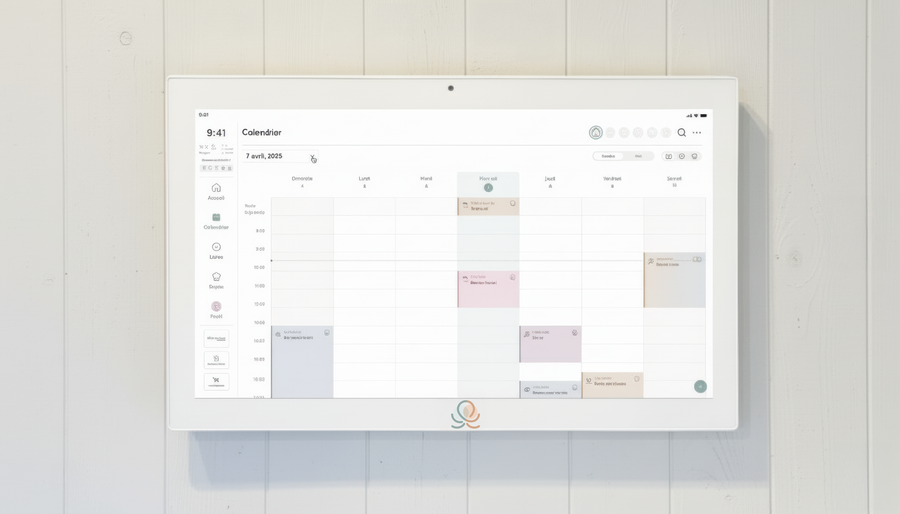
Meals, chores, the calendar and routines for the whole family in one place: on everyone's phone and on the Station on your wall.
The app is free on iOS and Android.