



A family meeting to keep cultivating this family philosophy
01 April, 2025
By Dominique Bernèche
In the previous articles in our feature “A Family Schedule That Breathes,” we explored how to diagnose an overloaded calendar, build in zen moments, adopt efficient habits and recognize the warning signs of over-planning. But how do we make sure these principles last over time, despite the inevitable ups and downs of family life? The answer lies in setting up a family meeting dedicated to this philosophy of balance.
Why a special “schedule that breathes” family meeting?
Every family transformation, however beneficial, naturally tends to erode over time. Good habits fade, old tendencies take over again, and we sometimes find ourselves back at square one without even realizing it.
Families that manage to maintain a healthy balance between organization and flexibility generally have one thing in common: they've made moments of collective reflection a fixture, where they assess their pace of life and adjust course if necessary.
This meeting isn't one more administrative meeting to fill up the family calendar – that would contradict our philosophy! – but a sacred space where the family steps back to look at how it's functioning with kindness and clear-sightedness.
How do we create an atmosphere that's conducive to this reflection?
So that this family meeting doesn't itself become a heavy obligation, the atmosphere in which it takes place is paramount.
The physical setup
-
Choose a relaxed setting: living room with cushions on the floor, the backyard in nice weather, a picnic at the park
-
Keep distractions away: phones in airplane mode, TV off
-
Plan a special snack: nothing encourages conversation like a few treats shared
-
Set up an opening ritual: a lit candle, soft music, any signal that marks this moment as different
One father shares: “We started the tradition of ‘philosophical crêpes’ – our meeting takes place around crêpes that we fill as we talk. It's become something we look forward to rather than a chore.”
The ideal timing
-
Choose a time when everyone is mentally available (not right before homework or getting ready for bed)
-
Go for a reasonable frequency: monthly or quarterly rather than weekly
-
Limit the length: 30 to 45 minutes at most, especially with young children
-
Respect the chosen time like an important appointment
Facilitation guide: the 4 steps of a family meeting that breathes
1. Celebrating the breathing room (10 minutes)
Always start by identifying what's working well in your current family balance:
-
Successful quality moments: “What were our best moments together this month?”
-
Protected spaces: “Did we manage to protect our non-productivity zones?”
-
Balance gains: “Who noticed an improvement in our pace of life?”
-
Positive initiatives: “Who had a good idea recently to simplify our lives?”
This positive start keeps the meeting from turning into a complaint session and anchors the conversation in gratitude rather than criticism.
A tip: use a “talking stick” that gets passed around and gives everyone, even the littlest one, the right to express their perception without being interrupted.
2. The family pace thermometer (10 minutes)
This step is about objectively assessing the current level of balance:
-
The visual scale: ask everyone to place a magnet on a scale of 1 to 10 representing the balance they feel (1: totally overloaded, 10: perfectly balanced)
-
Tension zones: identify the times of the week or day when the pressure is strongest
-
Warning signs: spot together whether any of the 10 signs mentioned in our previous article have reappeared
-
Individual feelings: let everyone say whether they currently feel “rushed” or “breathing well”
This shared assessment lets you check whether the whole family feels the same level of balance (often it doesn't!) and pinpoint exactly which adjustments are needed.
3. Collaborative adjustment (15 minutes)
This is the heart of the meeting: finding together how to preserve or restore balance:
-
Selective sorting of activities: “Are there activities that bring us more stress than joy?”
-
Simplifying processes: “How could we make some routines less burdensome?”
-
Protecting the breathing bubbles: “Are our relaxation moments protected enough?”
-
Seasonal adaptations: “How will we need to adjust our pace for the coming season?”
The goal isn't to reinvent everything at every meeting, but to make micro-adjustments that keep us on course toward a lasting balance.
A mother shares: “Our oldest son pointed out that evening meals had become too stressful again. Together we decided to push dinner back by 30 minutes, which transformed that moment.”
4. Commitment and celebration (5 to 10 minutes)
End every meeting with:
-
The 2 or 3 concrete adjustments: choose together a limited number of changes to put into practice
-
Dividing up responsibilities: clarify who will look after which aspects
-
A moment of appreciation: thank everyone for their participation and their candour
-
A light closing activity: finish with a quick game, a joke or an affectionate moment
This positive ending seals the decisions made and closes the meeting on a light note that reinforces the feeling that looking after family balance can be enjoyable.
The keys to a meeting that works over the long haul
Adapting the format to the kids' ages
The meeting will naturally take different forms depending on the participants' ages:
With little ones (ages 2 to 5):
-
Limit it to 15 to 20 minutes
-
Use pictures or symbols to represent activities and emotions
-
Include playful elements like puppets to make expression easier
-
Accept spontaneous comments and movement
With school-aged kids (ages 6 to 11):
-
Give them roles (timekeeper, note-taker with drawings)
-
Use concrete metaphors (the week's train going too fast)
-
Encourage their suggestions, even the most creative ones
-
End with a shared physical activity
With teenagers (ages 12 and up):
-
Let them lead certain parts of the meeting
-
Acknowledge their need for independence in managing their time
-
Explore technology as an ally rather than an enemy of balance
-
Be open to questioning your own organizing habits
Overcoming the classic obstacles
Lack of participation:
-
Start with topics the kids are especially interested in
-
Work their concerns into the agenda
-
Use a variety of facilitation techniques (drawings, sticky notes, votes)
-
Explicitly value every contribution
The tendency toward blame:
-
Set the rule of constructive feedback (criticism + suggestion)
-
Rephrase complaints as proposals yourself
-
Refocus on solutions rather than problems
-
Model nonviolent communication
Difficulty following through on decisions:
-
Limit yourselves to 2 or 3 realistic changes per meeting
-
Create visual reminders of the decisions made
-
Plan informal check-ins between meetings
-
Celebrate small wins to keep motivation up
How the meeting naturally evolves over time
A family meeting focused on balance isn't set in stone. It evolves naturally as the family matures in its understanding of its own needs and rhythms.
The first meetings
At first, the discussions may be more superficial or focused on very concrete matters:
-
“We have too many activities on Wednesdays”
-
“Mornings are too stressful”
-
“We don't have enough time to play”
That's normal and necessary. Start with these practical adjustments, which will build trust in the process.
Gradually going deeper
With time and experience, discussions will naturally move toward deeper reflections:
-
“What are our real family priorities?”
-
“How do we define success for our family?”
-
“What balance do we want between structure and spontaneity?”
These more philosophical conversations emerge organically once the family has solved its most pressing practical problems.
One mother recounts: “After a few months of regular meetings, our 12-year-old son asked a question that made us all think: ‘Do we organize our time to do more things, or to better enjoy the ones we do?’ It became our go-to question.”
Gradual ownership
The sign of a successful meeting is its gradual adoption by every member of the family:
-
The kids start asking when the next meeting will be
-
They spontaneously bring up topics to discuss
-
Some rituals are started by them rather than by the parents
-
Decisions that were made are naturally brought up again by different members
One father shares: “One day, when I was starting to fill our weekend with activities, it was my 8-year-old daughter who gently reminded me of our commitment to keep one day free of planning. The meeting had done its job – she had absorbed our philosophy.”
Conclusion: beyond the tool, a philosophy of life
The family meeting dedicated to balancing organization and breathing room isn't just one more tool in your parenting arsenal. In time, it becomes the guardian of a deep family philosophy: the one that holds that our time is precious precisely because it isn't entirely filled.
In a world that prizes overactivity and perpetual optimization, setting up this regular space for reflection is an almost revolutionary act. It's declaring together, parents and children, that you're deliberately choosing another path – that of conscious balance.
Over the years, it won't just be your schedule that breathes better – it will be your whole family, having developed a healthier relationship with time, pace and priorities. And that may be the finest gift you can give your children for their future lives.
As one participant in our workshops sums it up perfectly: “Our monthly meeting has become much more than a meeting – it's the space where we remind each other what kind of family we want to be. And that's priceless.”
This article is the last in our special feature “A Family Schedule That Breathes,” published in the April 2025 issue.
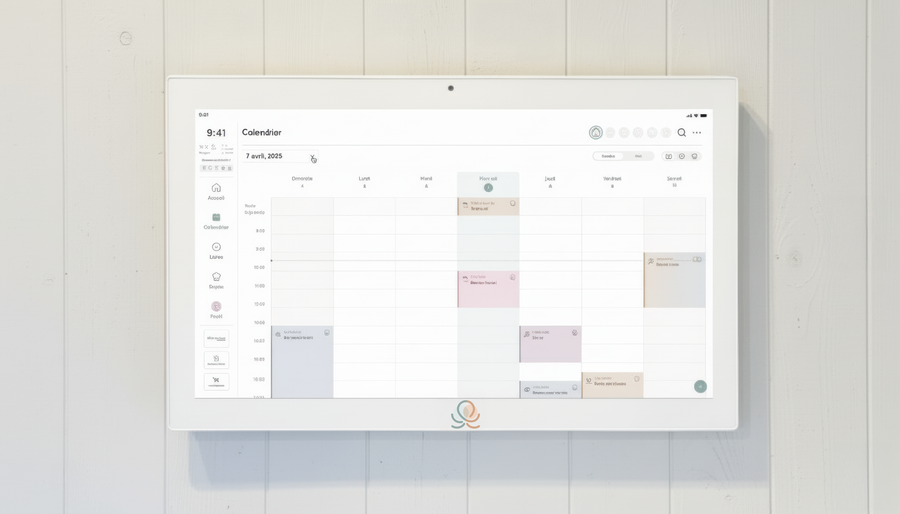
Put these tips into practice
Get the whole family organized with Octave
Meals, chores, the calendar and routines for the whole family in one place: on everyone's phone and on the Station on your wall.
The app is free on iOS and Android.