



Parental leadership and family organization: a guide for modern parents | Parental Leadership special feature
02 February, 2025
By Dominique Bernèche, founder of Les Belles Combines and Octave
Juggling career, family life and daily chores sometimes feels like an impossible circus act. What if the solution lay in a completely different approach to family organization? Discover how the concept of the “parent leader” can transform your family life.
A quiet revolution in Québec homes
“I used to be constantly exhausted, running after everyone to get things done,” Caroline, a mother of three, confided to me at a conference. “Today, our house runs almost like a small, well-oiled business, and paradoxically, the atmosphere has never been so relaxed.”
Like Caroline, more and more Québec parents are discovering the benefits of an approach inspired by modern management: parental leadership. Out with the authoritarian parent-boss, in with the parent-leader who guides, inspires and organizes.
Why rethink family organization in 2024?
According to the report “Being a Parent in Québec in 2022,” based on the 2022 Québec Parenting Survey (Enquête québécoise sur la parentalité 2022), 61% of parents feel that taking care of their children takes more energy and time than they have. Even more telling, 48% frequently feel like they're running all day long to get their daily tasks done.
The problem, in my view, isn't a lack of willingness among family members, but the absence of a clear structure and a shared vision. Businesses figured this out long ago: without an organizational system, even the best intentions come to nothing. Of course, a family isn't a business, but like any human group, it thrives on cohesion and effective parental leadership.
The essential pillars of modern parental leadership
A clear vision and goals for a thriving family
Like any good leader, the modern parent defines a clear vision for their family. This vision goes well beyond simply dividing up chores – it creates a true family culture where everyone understands their role and its importance. For example, when a child tidies their room, they aren't doing it simply to avoid mess, but because they're actively contributing to the collective well-being of the family.
Effective everyday systems and structures
Daily improvisation gives way to proven systems that serve as stable reference points for the whole family:
-
Visible organization boards let everyone see their responsibilities and the progress of family tasks at a glance. These visual tools make expectations explicit and encourage kids' independence.
-
Clearly defined routines create a secure framework where everyone knows what to do and when to do it. For example, a well-established morning routine lets kids get ready without stress and builds their sense of responsibility.
-
Well-suited planning tools take into account the kids' ages and the family's specific needs. A young child might have an illustrated task list, while a teenager might prefer an app on their phone.
Positive communication and family engagement
How we communicate makes all the difference in each family member's engagement:
-
Clearly expressed expectations help avoid misunderstandings and frustration. Instead of saying “tidy your room,” we get specific: “put your toys in the toy chest and put your dirty clothes in the laundry basket.”
-
Constructive feedback helps kids improve without discouraging them. We first point out what was done well before suggesting possible improvements.
-
Regular recognition of effort reinforces positive behaviors and maintains motivation. Celebrating small daily victories creates positive momentum.
The concrete benefits of parental leadership
Families that have adopted this approach report significant changes that touch every aspect of family life:
-
Reduced daily stress shows up as fewer last-minute rushes and emergencies to deal with.
-
Greater independence in kids develops naturally when they clearly understand what's expected of them and have the right tools.
-
Quality time together increases because less energy goes into managing daily tasks.
-
Fewer conflicts result from better communication and clearly defined expectations.
“My kids have become surprisingly independent,” says Alexandra, a single mom of two. “The most surprising part? They're proud of their responsibilities. My 8-year-old son, noticing my constant good mood over the past few days, recently told me: ‘Mom, did you see how well the house runs when we all pitch in?’”
Assess your current family situation
To get your transformation toward parental leadership off to a good start, take the time to analyze your situation:
-
Identify your daily friction points and the moments that generate the most stress
-
List the tasks that regularly overwhelm you
-
Assess each family member's level of independence
To help you with this assessment, download our complete guide to developing independence or use the interactive version available in the Octave app.
An investment that's worth it
Many parents don't hesitate to invest time and energy in their kids' extracurricular activities and hobbies. These activities, though enriching, often get added on top of an already full routine. Committing to helping our kids become independent through structured family organization is a different kind of investment, but just as valuable. It lets them acquire fundamental skills like commitment, effort and an understanding of their place in a group – foundations that will serve them for life.
The added bonus? Once this structure is well established, it frees up time and energy. It then becomes much easier to fit in extracurricular activities or family leisure time, because daily life is better managed and runs more smoothly.
Conclusion: transforming your family life through parental leadership
The parent leader doesn't just create a well-ordered home. They lay the foundations for a stronger, more independent and more fulfilled family. It's not just a matter of organization. It's a true paradigm shift that prepares our kids to become responsible, capable adults.
Discover the rest of our complete special feature on parental leadership:
-
The foundations of an organized family: choosing and setting up your system
-
The art of communication and sticking with your organization system
Want to track your progress? Use our progress guide directly in the Octave app or download its printable version from our free printables.
🚀 Find this article and much more in the Octave app (shared calendar, collaborative task list, meal planner, centralized family info and independence tracking), your number one ally for an organized family life! 📱✨
Put these tips into practice
Get the whole family organized with Octave
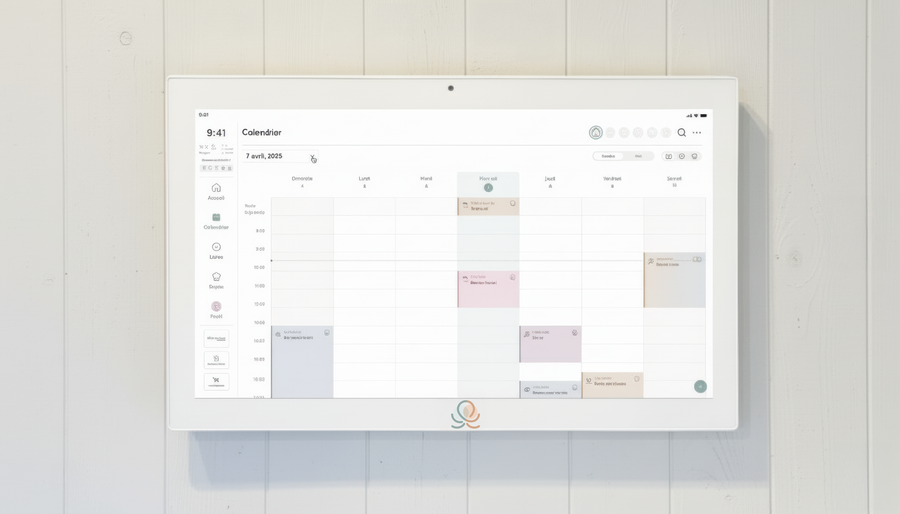
Meals, chores, the calendar and routines for the whole family in one place: on everyone's phone and on the Station on your wall.
The app is free on iOS and Android.