



When yesterday isn't really yesterday: tips and tricks for understanding the concept of time
23 September, 2019
Time is so abstract and complex for little ones! Often, if you go by what children say, everything happened yesterday: “Yesterday, we went to the park,” “Yesterday, I celebrated my birthday,” “Yesterday, I had gym class,” “Yesterday was Christmas and I got a dinosaur!” It's often hard for children to tell all past events apart. So in this article, we offer the different reasons why it's important for a child to be aware of the passage of time, along with a few suggestions for getting there.
Understanding the concept of time
- When a child understands the different concepts related to time and duration, they can make sense of a lot of things in their environment. If they know their birthday is next Tuesday, they can look forward to it, count the sleeps and get ready for it. It's easier for them to grasp when the awaited day actually arrives than to wait indefinitely, asking every day whether their birthday is today.
- By letting children anticipate events, we can also reduce their anxiety; a child can indeed feel anxious about surprises or situations that aren't common or frequent. When you don't understand what a day or a week is, or don't know that Wednesday comes after Tuesday, everything becomes a surprise! By giving a child time markers, we give them a reassuring framework. The child knows what to expect, and that makes them feel secure.
- Time markers help a child build a mental picture. For example, if we go over the holidays of the year with them, we'll look at Christmas, Halloween and so on. We'll talk about family rituals around those holidays and the memories the child has of them. If we work on the seasons, we can look at the temperature (hot, cold, weather), the clothes worn to go outside, the activities. It's through conversation that the child builds a mental concept of the different markers.
- Once a child understands the days of the week, we can give them more responsibility. They can pack their own lunch on school days and put their bag away for the weekend. They can do chores on certain specific days or know which day is library day or which evening is for their lessons and activities. In everyday life, that can be very helpful!
- Understanding time concepts helps a child understand others better and be better understood. A child who tells a story with the elements in a logical order is much easier to understand. If you want to help your little one with this, aim for a story in three parts: beginning – middle – end. That will be enough for them to tell their story and keep it coherent; they'll have the important elements of their account. As for comprehension, when you make a request with two instructions, they'll be able to understand what's expected of them.
Tools to use
- The seasons wheel: the seasons wheel is a circle divided into four seasons, within which you'll find the months and the different holidays of the year (Christmas, Mother's Day, New Year's, etc.). This tool helps children get a big-picture view of the year.
- The Les Belles Combines monthly planner: this tool lets a child see when activities, celebrations and special occasions are (thanks to the Magnétos chore magnets, among other things) and clearly understand the difference between the different days (weekdays and weekend days).
- The Time Timer: a visual tool that lets a child see concretely how time is passing and how much time is left.
To discover other tools that will help your little ones truly understand the passing of time (and help you organize your schedule more efficiently!), check out our section dedicated to time management.
Would you like first access to all the content published in the Magazine each month, plus our Toolbox, which includes free downloads that are as practical as they are fun? Subscribe to Belles Combines Magazine today!
Put these tips into practice
Get the whole family organized with Octave
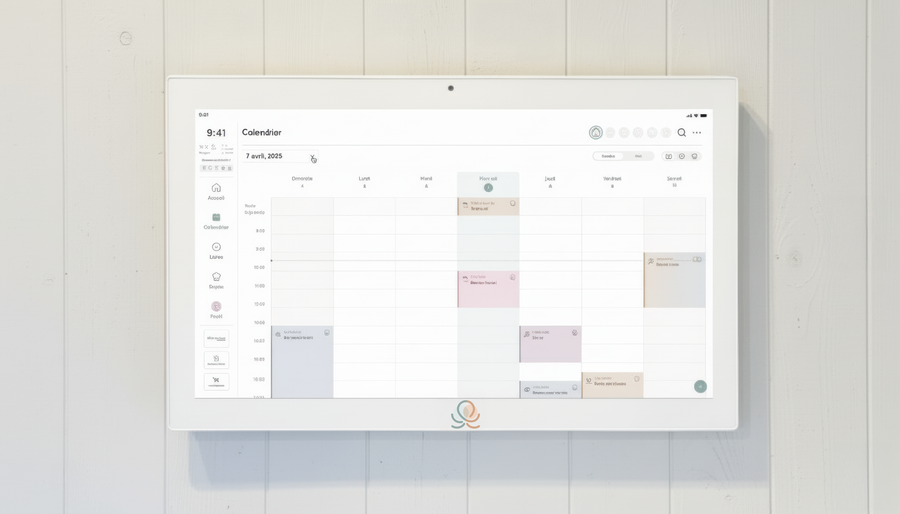
Meals, chores, the calendar and routines for the whole family in one place: on everyone's phone and on the Station on your wall.
The app is free on iOS and Android.