



The ten commandments of sharing the mental load
14 December, 2022 • Par Seasonal
Let's face it, talking about the mental load, reviewing the rules of the game and working as a parenting team every day is an everyday challenge that sometimes comes with a heavy emotional load and calls for good communication skills. To keep the exercise kind and constructive, don't neglect your mental preparation!
Julie and Marie-Andrée from De Saison - Art de vivre et de travailler have prepared a few reminders and preparation exercises for you to make collaboration and communication flow more smoothly throughout your exercise.
The five commandments for a caring parenting team
1- You shall visualize your dream parenting team.
It's well known that great teams are excellent at visualizing their dream, and it's that dream that guides them day to day. Do you dream of building a thunderous bond? Do you both want to up your game as a parenting team? Establish a balance and build a fiery collaboration? What would that look like day to day?
Each on your own, take the time to visualize your definition of the ideal parenting team in every detail. Also take the time to put it into words, so you can talk about it clearly. Remember that, to mobilize the other members of the team, your dream must be inspiring and win-win!
2- You shall identify your needs.
“It's better to speak in the first person”: is that advice you've already heard? We'll go further by suggesting that you speak in the first person about your needs rather than letting the discussion slide toward blame, perceptions, past situations or feelings for too long. Admit that “I need help” goes over better and is harder to dispute than “I feel like you don't help me enough,” right?
What's more, when our personal needs are clear (having more time for ourselves, slowing down, resting, getting our weekends back, working as a team), we can co-build our solution around them, and so we save a lot (a lot!) of time.
3- You shall put your priorities in order.
“You can do it all, but not all at once” is another popular saying. When you add one partner's priorities to the other's, you can end up with too many priorities. Our mental load also comes from our desire to do too much and our determination to excel at everything, at every level, all at the same time. We end up scattered, and it's proven: multitasking is less effective than single-tasking. To feel satisfied, it's better to identify our real priorities, in the right order. First individually, then together. That way we can commit to them together, plan our schedule accordingly and avoid overcommitting elsewhere.
4- You shall make room for the other person's needs.
Teamwork means compromise and reconciling points of view. When we're looking for THE right solution, points of view clash! To turn confrontation into co-creation, you need to leave the other person room to express themselves and to consider their dreams and needs even if they're different from yours. To commit, everyone needs to feel seen, heard and autonomous, and to see meaning and enjoyment in it (it's science). Lighten the mood!
5- You shall write a shared definition of success.
Before dividing up the chores and roles in the family, take the time to pool your ideals and write a shared definition of success together. How do you measure the success of your parenting team? Be factual and don't hesitate to define in precise terms what a well-kept home, well-raised kids, a healthy family life, and a happy couple and happy parents mean to you. Without sliding into perfectionism, ask yourselves what your threshold of satisfaction is and where “just enough” sits.
Organizing the family load over time: 5 commandments for moving from intention to action
1- You shall set aside white time.
The first time:
Taking time outside of daily life to organize how your parenting team works? Who's ever done that? It's been ages since marriage-preparation courses were the norm, right? True, it's an exercise that takes a bit of time the first time around, so why not split it into several short sessions and put them in the calendar? Like a meeting between partners, why not! At the office, people do bring doughnuts, so think about making it all enjoyable and relaxed.
Over the weeks:
Co-leadership takes a lot of communication and collaboration. You still have to identify the right time to talk about it and to celebrate our wins!
Day to day:
For us, managing our mental load happens through a series of daily and seasonal rituals. Every day (or as needed), we take 15 minutes to unload our minds, take stock of our needs (priorities), reconcile those needs, rework our game plan and review our calendar. This agility keeps us from accumulating mental load and from carrying all of it around with us during the day. It's also the best way to take back possession of our time and make sure we take action within a reasonable time. We do it at work, so why not do it for the household too?
2- You shall look at your calendars.
This white time is the one we always forget to schedule! So start by making room for these strategic moments in your daily life, individually and together. Also don't forget to give yourself personal white time for the activities that matter to you and are good for you (based on your priorities), such as sports, outings with friends, family time, couple time or your hobbies and entertainment. What matters is that everyone feels their needs are being considered.
3- You shall grant yourselves shortcuts and help.
Next, look at your calendar and choose times for your family responsibilities within your work time. Overflowing? Think about splitting tasks into micro-tasks, making good use of your transitions, allowing yourselves shortcuts or calling on outside help.
4- You shall stay realistic in your expectations.
Desires and expectations are elastic, but time is mathematical. Did you know that adopting a habit takes 21 days on average? There's no point in trying to improve everything at once. Go one habit at a time and remember that it's normal to slip. Don't rap each other's knuckles. All you have to do is start practicing again for the habits to take root.
5- You shall aim for satisfaction rather than perfection.
Nobody manages to do everything, all the time and on time. Keep your agility, your learning mindset and your sense of humor. The performance-driven society is tough to shake, but remember that what you're looking for is a feeling of satisfaction: the satisfaction of knowing that the priority needs have been addressed. Relax, have fun and give yourself time to decompress from the day. There will always be tomorrow to start again.
This blog post is part of our special feature “Parenting Team.” To see all the content in this feature, which offers tips and advice to help you work better as a parenting team and share the mental load effectively, check out this article!
Put these tips into practice
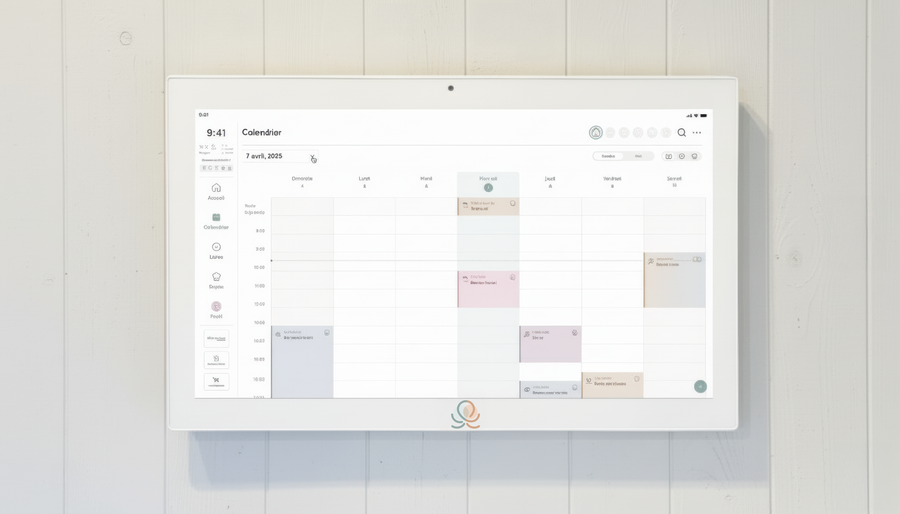
Get the whole family organized with Octave
Meals, chores, the calendar and routines for the whole family in one place: on everyone's phone and on the Station on your wall.
The app is free on iOS and Android.